0
Lesson no 4


South African English


Before I came to South Africa I sometimes wondered if it wouldn’t be boring just to improve my language skills, as my English already was not too bad, instead of learning a whole new language. But when I came here I quickly realized that the South African English has quite some peculiarities that I still had to learn. It starts with all the different accents that developed as English isn’t the home language of most South Africans. So it doesn’t astonish that you can hear the weirdest and most diverse pronunciations of some words. I often actually feel like every single person here has his very own accent not comparable to anyone else and influenced by the very own history. In the beginning all these different accents made it harder for me to understand some people than I had expected. But by now I think I got used to it quite well and don’t need to smile approvingly anymore hoping that it fits the situation after not having understood what someone wants to tell me even after asking several times. And I also learned lots of new South African idioms, most of them originating from one of the other 10 official languages. At this point I just want to share some with you:


Sharp – was probably the first and maybe most important new word that I learned here and can mean almost everything. Most of the time you use it to show agreement or thank someone and it’s often doubled up to sharp-sharp and combined with a thumb up.

Robot – In South Africa robots aren’t strange figures from science fiction movies but the normal term for traffic light.

Bakkie – many people, including me, are driving them:  pick-up trucks

Braai – the South African barbecue.

Howzit (How is it?) – A popular alternative to “how are you?” that you are normally asking everyone you meet during the day.

Askies – the Afrikaans word for “sorry” and both words are probably those that you hear the most throughout your day as South Africans like to say sorry for literally everything no matter if something is their fault or not!

Lekker – another Afrikaans word that does not only mean delicious, as Germans might think. It can be used to describe all sort of things, including food, as “nice”, “good” or “great”. In the beginning it always sounded strange to me when people said things like: “That was a lekker weekend.”

Shame – is also a very important word in my South African English repertoire. Shame can be used in almost every sentence and means everything and nothing. You can use it to express pity or just say “shame” because you saw a cute baby. It works for any kind of sympathetic feelings.

Now, just now, now now – South Africans seem to have a very special relationship to time. That’s why they need many different expressions to describe when they are going to do something. I’m still not sure which of the three expressions is the worst, but I think it is just now what could mean every time in the next several days. Now is maybe comparable to later and now now is what comes closest to now. But there is one thing you can always be sure about: Even though it sounds so none of them actually means now! 

Eish – A cry often used to express surprise or frustration or just to fill the silence.

I make a plan – A phrase that South Africans love to use!

Auntie – is coming from aunt and that’s how women older than oneself often are called. Also at work the children use to call me auntie, mam or teacher.

Is it? – also a frequently used expression to show your interest or again just to fill the silence.

Klap – “I klap you!” is often used instead of “I smack you!”


0
Lesson no 3


Load shedding


Load shedding is one of many words that I had never heard before I came to South Africa. But after living here for almost ten months now I had more than enough chances to experience it myself!

As electricity in South Africa is always scarce, from time to time it may happen that it doesn’t suffice to meet the country’s demand. In these cases the electricity supply in certain changing areas is interrupted to avoid a national black-out that would have much worse consequences. And that’s called load shedding. Unfortunately load shedding often occurs in the evening hours when it’s not only dark and cold, but also when people want to cook. But as South Africans are very creative there are already lots of load shedding recipes available on the internet!

There also is scheduled load shedding that’s announced in advance. In summer people said there would be a lot of load shedding now to save electricity for the winter, but actually I feel like the load shedding got more and more since I came here and gets even worse now that it is winter. For me that’s not even such a big problem, because as I live at work and I’ve got the big luxury that we have an emergency generator. But normal households don’t and even many facilities where you would expect it don’t. So it regularly happens to me that I arrive at the gym motivated to hit the treadmill and suddenly it just stops moving under my feet. But that’s a comparably small problem. I have much more pity with all those people that are sitting in their cold and dark houses without any electricity and even the batteries of cell phones and laptops are slowly dying – and that sometimes several days a week!


0
Lesson no 2


Weather


South Africa is situated in the southern subtropical zone, but due to varying elevation and the influence of the Indian and Atlantic Ocean it has a wide variety of climates. The Eastern coast for example is especially in winter the warmest part of the country thanks to the warm Agulhas Current. The climate at the western coast and also many parts of the country’s interior is much colder. Johannesburg on the other hand is situated at an altitude of more than 1700 metres above sea level. I need to drive only an hour to Pretoria which is less elevated and where the temperatures can be about 5 or 6 degrees Celsius warmer. 

So far here in Joburg the temperatures were quite enjoyable – even in summer. Most of the time they were between 25 and 30 degrees, on some rare days also up to 35 degrees. But because of the high elevation it’s very easy to get sunburned – especially for me with my rather sensitive skin – so that I sometimes only had to stay in the sun for 15 minutes until I started to turn red…In late spring and summer it was also raining almost every day. But not that long lasting gentle drizzling rain that I was used to from Germany. Instead it normally only rained in the evenings and most of the time only for less than an hour but so heavy that the streets seemed to turn into dirty rivers. Now that it is winter we haven’t had any rain for at least two months. That’s why it is very dry and bushfires are developing everywhere. Besides the winter temperatures for the moment are very cold! With up to 20 degrees during the day of course it is still quite warm compared to German winter, but at night the temperatures are almost dropping to freezing point. As our building is very badly isolated, my windows don’t shut completely and I only have a tiny little heater in my room I feel like living very close to the South Pole!

But what I really love about the South African weather is that no matter what season it is the sun is actually always shining. So even if it is cold for the moment you just need to go out into the sun to heat up - so it’s not comparable to the dark and uncomfortable German winter days.

0
Finally a sign of life from me again!

golf day


I’m very very sorry for writing so irregularly in the last weeks! I always have the best intentions to finally write a new post but then I just don’t find the time to actually do it … but I promise to be on the mend! That’s why I decided to write one “South African lesson” per week from now on. There are so many things here that already became completely normal for me so that I don’t even think about mentioning them in my posts. But I’m sure that for you many of these things wouldn’t be se self-evident and so they’re maybe worth their own posts.

To bring you up-to-date concerning my work at the moment I can tell you that quite some things changed for me. My project partner Stella, from who I wasn’t separated for more than one day in the last eight months, is already back in Germany since one week now. For me that means that I am living and working on my own now as the only international volunteer at Cotlands. After having done everything together for such a long time it is quite strange to be on my own now and of course it was much more fun together especially for enduring exhausting or also boring working days. But I will just see it as a challenge to do all this on my own now!
In my last posts I already complained a little bit about not having too much work to do at Cotlands for the moment but that also got better now as I am doing the same work on my own now so that I am quite busy now. I still do a lot of office work, in the last weeks I also had to help a lot with sorting store rooms and in the afternoons I still do the homework supervision at St Mary’s children’s home. Here I am now especially trying to help a 12-year-old boy that can’t read or write which was only recognized some weeks ago. Even the pronunciation of the single letters is still quite a challenge for him – and for me teaching him is actually quite a challenge too! For the moment I am making an own letter memory with him to introduce him to the alphabet and first words in a playful way.

Furthermore the children now plan to start a children’s home soccer team and want to play against other homes. So we are sometimes practising with everyone and playing some matches which is also for me a lot of fun because some of the children are quite good!

our cotlands stand at the golf day
This week I also represented Cotlands at the “Citizen’s Golf Day”. Right next to hole 4 Louisa and me, luckily I was allowed to bring some help because otherwise I would have had to sit there on my own all day long, had our little Cotlands stand with a big box for donations and some prizes for our raffle. Everyone that wanted to play the hole had to – more or less voluntarily - listen to our Cotlands promotion and in the end we were quite satisfied with the collected donations and happy about our first caddy tour!


For now I think that’s all, but as I promised: You will hear from me soon!

0
Getting used

Getting used top 10


Now that we are in South Africa for already six weeks we slowly start getting used to everything. I think that at Cotlands it’s not even that difficult to settle in, because we don’t have to change our living standard that much: We have got a big bedroom, we get good food, we can use a car and as we are not living in a host family we have got many freedoms that other volunteers don’t have, such as not being told when to be at home for example.

To give you an impression of some things that were sometimes maybe a little bit difficult to arrange with or just unfamiliar, even in a positive way, I collected my top 10 of things to get used to in South Africa.


1. Driving

Our volunteer car

Back in Germany when I was asked if I could imagine to drive for my project I was at first very enthusiastic about the idea because everything is much easier if you’re allowed to drive and Cotlands is the only project that I know for the moment where the volunteers are allowed to drive. After hearing many stories about the South African driving style - like that no one respects the traffic lights, that are called robots in South Africa, that drunk driving was normal and that it was ok to cross red lights in the dark because it would be too dangerous to stop – I was very curious what driving here would actually be like and expected everything. I was also excited about left-hand driving and imagined it to be very unfamiliar – especially changing gear with the left hand.

But as soon as we started driving here we realized that it is much less difficult than expected. The biggest difficulty was to activate the indicators and at first I always activated the windscreen wiper instead. Our car also was a little bit difficult at first, as it’s a very old bulky truck and parking always is quite some challenge. But all in all we got used to driving very fast.


Unfortunately most of the things that we heard about the South African driving style is true. There really are many people that drive drunk and it’s not rare that you see people ignoring red lights. Another difficulty are the minibus taxis that are driving very unpredictable and reckless. 


2. Typical German?


Something that can sometimes be a little bit frustrating is being asked where you are from as soon as you say something very easy as hello. But most people even here that we are from Germany and then the first thing always is that they try to impress us with the German words they know, such as “Guten Tag”, “Wie geht’s?” or “Was geht?”, “Scheiße” and “Arschloch”. But we didn’t really expect people to know other words, because those are probably the most common words to know in different languages.


Even though I knew that people think Germans would drink a lot of beer I didn’t expect them to have such strange ideas concerning Germans and beer. At least many people here are truly believing us that we always start our day with cereals with bear instead of milk or that we would already feed our babies with beer so that they can get big and strong.


The second thing that many people seem to think of is Hitler. And what’s for us terrifying about that is that some people even had a positive opinion of him because of passionately pursuing his objectives. Most of the time they understood why we don’t like him. But anyway it’s very strange to us if people that we barely know frankly and without hesitating tell you what a great man Hitler was. I don’t think that I’ll get used to that very fast!


3. Walking in the streets
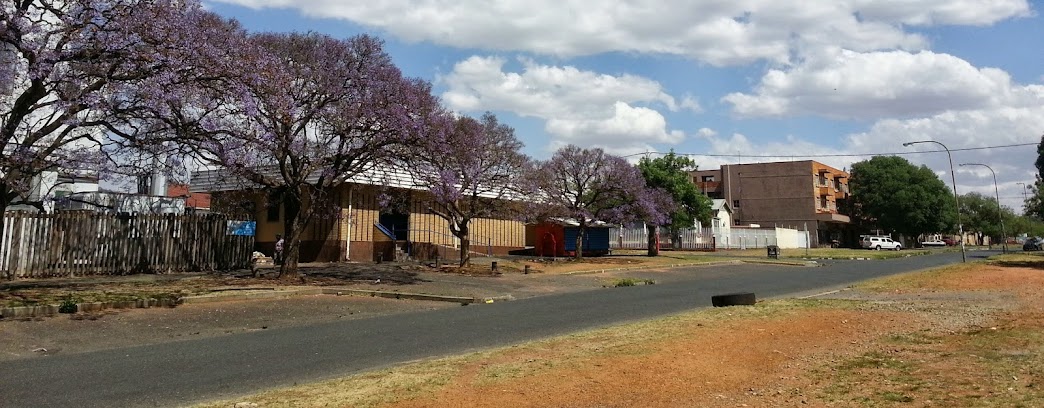

Turffontein

For two weeks now we always have to bring the two older children living at Cotlands to school. The way is not very far but it always takes quite some time. First of all because the two of them like to walk very slowly and stop every ten metres to look at something or pick something up. Secondly because so many people want to talk to you. Most of them are just saying hello but on the first day we were really confused when a horde of children ran towards us and tried to hug us all at the same time. When we looked closer we could recognize some of them from the afternoon care, but it also happens that random children want to hug us – something that never happened to me before in Germany.


4. Hey, how are you?

Something that sounds stupid but was quite difficult in the beginning was the common greeting phrase “how are you”. Of course we know that question from Germany but it’s not used that constantly. At first we always were too slow to ask back because the person had already passed us and we felt quite unfriendly, but now we really got the hang of “Fine. How are you?”


5. South African Rand
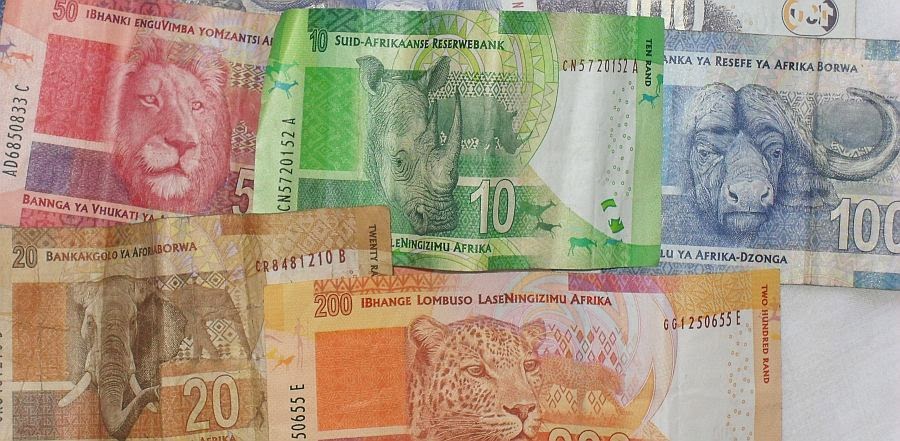

South African Rand ZAR

Even though I don’t have to calculate that much anymore the translation from Rand to Euro is always a little bit exhausting. In most cases I can judge the prices in Rand but sometimes it’s better to calculate in Euro because then I have a much better feeling for the values. But as 1 Euro is worth about 14 Rand calculating is quite some challenge after almost six months without school!


At least the banknotes look much better than Euro!


6. Food
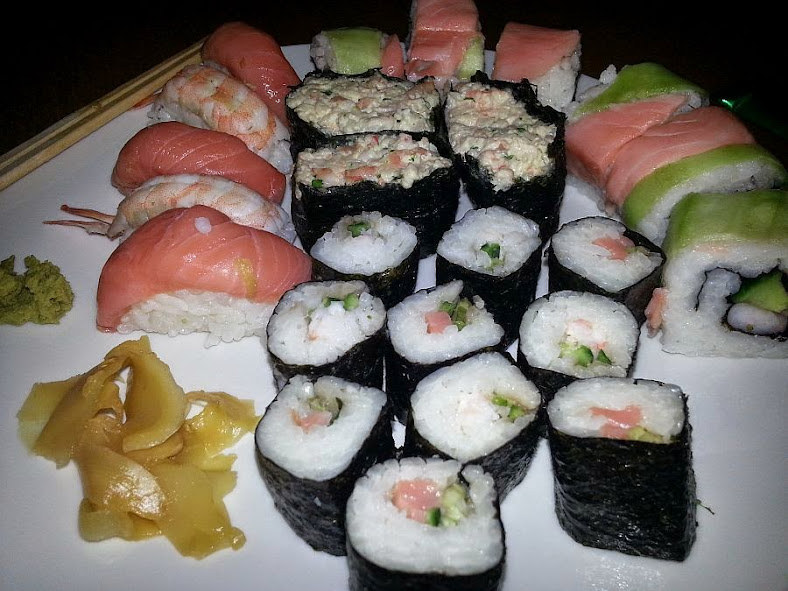

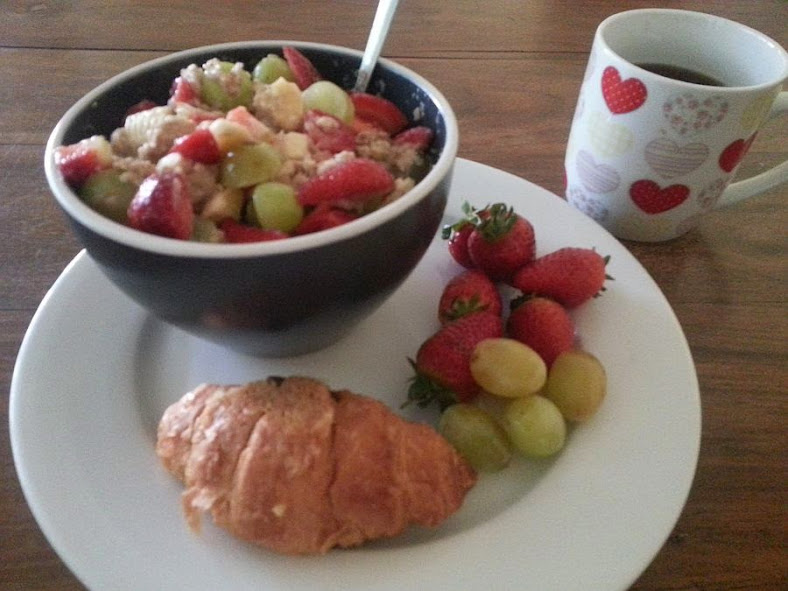
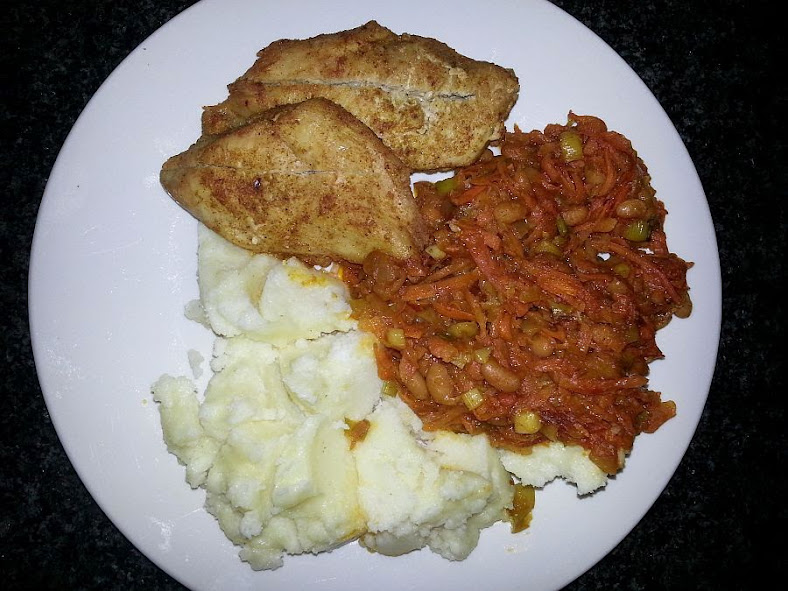
Supper: SushiBreakfast Lunch:Pap with chicken and vegetables

Our food here is comparatively luxurious and most of the other volunteers are kind of envious of it. In the morning we always eat Cereals with a lot of fresh fruits. We normally get the fruits in our food donations and if we are lucky we get fancy fruits like papaya or guave and other nice things like strawberries, raspberries or blueberries for example.

For lunch we always get food from our Cotlands cook. We often get typical South African things like Pap, a traditional polenta made of ground maize, or rice with chicken and sauce.


Supper is always our favourite meal because that’s when we eat all the stuff that we get in the Woolworth donations. We get the donations twice a week and to see what is in the boxes is always a little bit like Christmas. If we’re lucky we get things like sushi, little sausage or chicken pies, samosas, fish and lots of different things. We still don’t know the whole variety so that it still keeps being exciting.


7. Punctuality

Before we came here we already heard a lot about South African punctuality or, to put it another way, unpunctuality. But as we came here we first were positively surprised because in our project everyone seemed to be in time as we knew it from Germany. But by now we discovered that Cotlands maybe is an exception because in our free time when we’re doing things with friends one of the favourite sayings seems to be: “South Africans don’t follow time, we have time!” That’s why we aren’t surprised anymore when we are invited to a Braai at half past six and we hungrily start eating at about midnight.


8. Security
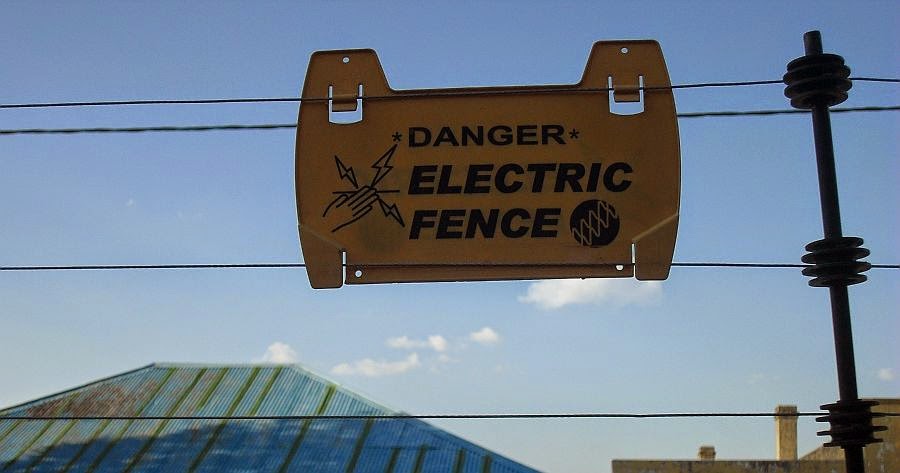

Electric fence

Security is something that we also got used to very fast. At first it was strange to live behind an electric fence and that almost every house is surrounded by a high wall. It seemed to be annoying to always lock the car from the inside and leave the windows shut or to have a security guard that constantly watches the house. Also not walking in the streets after four o’clock and advices like always walking on the busier side of the road and minding gates because people could just pull you inside sounded strange. But by now all that just feels normal and restricts us much less than it might sound like as we have our car.


9. Afrikaans

As Afrikaans is the first language of most white people in South Africa it happens that people try to speak to us in Afrikaans. At first I always thought that they were speaking English and that it was my fault and I just didn’t understand them. It’s not that exceptional that people talk to us in English and we can’t understand them straightaway because there are so many different accents and sometimes you don’t understand the easiest things just because of the pronunciation.  Again other people’s English is very good to understand and normally I comprehend what people are telling me it sometimes just needs some concentration. But I don’t really understand any Afrikaans, only if it’s written it’s sometimes understandable, but most Afrikaans speaking people seem to understand us talking German quite well.


10. New nicknames


The last thing to get used to is that most people can’t really pronounce my name. At first I always introduced myself as Frederike but no one could pronounce the name and still less remember it. So I started to say that I’m just Rike and that’s much better, even though it sounds more like Rikaa. Another new nickname for me is Frederista. I don’t really know why but somehow two of the children are convinced that that would be my name and don’t believe me if I tell them that it’s not.

But most of the children don’t call us with our names anyway. For the older babies we are Mama, the Early Learning Group children just call us teacher and the afternoon care children call us Mam. Especially being called Mam still sounds very funny.


I hope that I could give you a little impression of life in South Africa especially because my list got much longer than I intended!